intermediate9 min read
Costs, Taxes & Slippage
#costs#brokerage#tax#slippage
Costs, Taxes & Slippage
In one line: Every trade has hidden fees, so plan for them or they will slowly eat your profits.
🎯 What you'll learn
- The main costs you pay each time you buy or sell.
- What spread and slippage (a worse-than-expected price) mean.
- How tax works, in simple terms.
- Why trading too often makes costs pile up.
- Easy habits to keep your costs small.
📘 Key concepts
The fees you pay on every trade
Think of a busy bazaar (market). To buy and sell there, small fees are added on top. In the stock market it is the same.
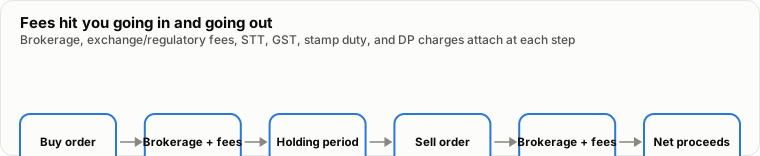
- Brokerage (also called commission) — the fee your broker (the company that places your trade) charges. It can be a flat amount or a percentage.
- Exchange and regulatory fees — small charges from the market and the rule-makers. In India the market rule-maker is SEBI.
- STT (Securities Transaction Tax) — a small tax on the value of the trade.
- GST (Goods and Services Tax) — a tax added on top of the brokerage and some fees.
- Stamp duty — a small government charge when you buy.
- DP charges — a small fee when shares leave your Demat account (the online locker that holds your shares).
- Each fee is tiny. Together they add up. Exact rates change over time, so always check the current ones.
Spread — the gap you pay
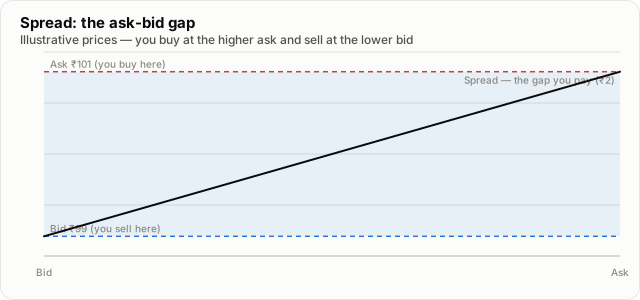
The spread is the gap between the bid (the highest price a buyer will pay) and the ask (the lowest price a seller will accept).
- You usually buy at the higher ask price and sell at the lower bid price.
- That gap is a cost you pay without seeing it as a "fee".
- Big, popular stocks have a small spread. Small, quiet stocks have a wide spread, so they cost more to trade.
Slippage — a worse price than you hoped
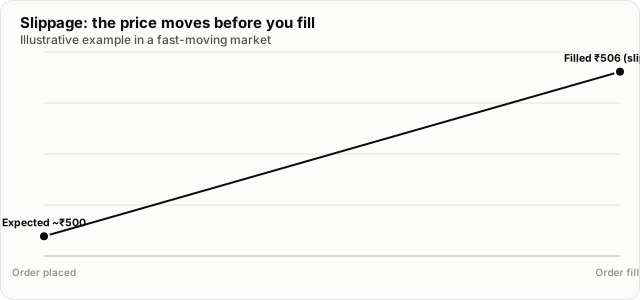
Slippage is when your order fills (completes) at a slightly worse price than you expected.
- It happens most in fast-moving markets, or in illiquid stocks (ones with few buyers and sellers).
- Like booking a cab in heavy rain: the price you pay is a bit higher than the price you first saw.
- Using a limit order (an order with a fixed maximum price) helps you avoid ugly slippage.
Tax on your gains
When you sell for a profit, you may owe tax on that gain.
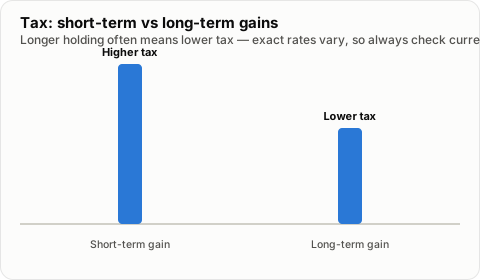
- Short-term gain — you held the stock for a short time. This is usually taxed at a higher rate.
- Long-term gain — you held it longer. This is often taxed at a lower rate.
- So holding longer can mean less tax. Frequent trading usually means more tax and more fees.
- Keep good records of every buy and sell. A tax professional can help you get it right.
🔍 Example
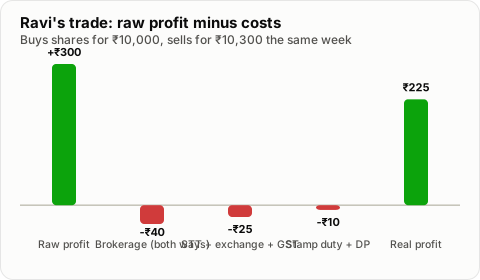
Ravi buys shares worth ₹10,000 and sells them the same week for ₹10,300. That looks like a ₹300 profit.
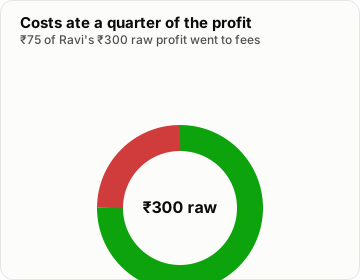
- His true profit is ₹225, not ₹300. Costs took a quarter of it.
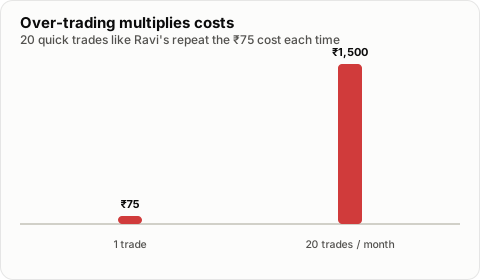
- If Ravi made 20 quick trades like this a month, those ₹75 costs repeat 20 times. That is ₹1,500 gone in fees alone.
⚠️ Common mistakes
- Looking only at the price change and forgetting the fees.
- Over-trading (buying and selling too often) — every trade adds fresh costs.
- Trading illiquid stocks and getting hit by wide spreads and slippage.
- Ignoring tax until year-end, then having no records.
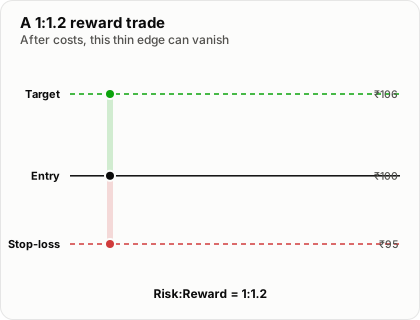
- Taking a 1:1.2 reward trade — after costs, the small edge can vanish, so the reward may not be worth the risk.
✅ Key takeaways
- Every trade has costs: brokerage, taxes, spread, and slippage.
- Spread and slippage are hidden costs, not listed as "fees".
- Holding longer often means lower tax; frequent trading means more tax and cost.
- Factor costs into your risk-reward before you enter.
- Use a low-cost, regulated broker, keep records, and avoid over-trading.
📝 Quick check
- Q: What is slippage? A: Getting your order filled at a slightly worse price than you expected, common in fast or illiquid markets.
- Q: Why does frequent trading hurt returns? A: Because each trade adds costs and often higher short-term tax, and these pile up quickly.
- Q: Where should costs fit in your plan? A: Inside your risk-reward check, before you enter, so a small edge is not wiped out by fees.
📖 New words
- Brokerage / Commission — the fee your broker charges to place a trade.
- STT (Securities Transaction Tax) — a small tax on the value of a trade.
- DP charges — a small fee when shares leave your Demat account.
- Demat account — the online locker that holds your shares.
- Spread — the gap between the bid (buyer's price) and ask (seller's price).
- Slippage — filling at a worse price than expected.
- Illiquid — a stock with few buyers and sellers, so it is harder to trade.
- Limit order — an order with a fixed maximum (or minimum) price.
- Short-term / Long-term gain — profit from holding a stock a short or long time, taxed differently.
Educational content only — not financial advice. Trading involves the risk of losing money.