intermediate10 min read
Trend-Following Strategy
#strategy#trend
Trend-Following Strategy
In one line: Find a strong trend, wait for a calm dip, enter, and ride the move with a clear stop and target.
🎯 What you'll learn
- What "trend-following" (trading in the same direction the price is already moving) means.
- A simple 5-step rule set to spot, enter, and exit a trend.
- Where to place your stop-loss (a safety exit that limits your loss) and target.
- Why this works in strong trends and fails in choppy, sideways markets.
📘 Key concepts
What a trend is
A trend is the general direction the price is walking. Think of a river — it flows one way.
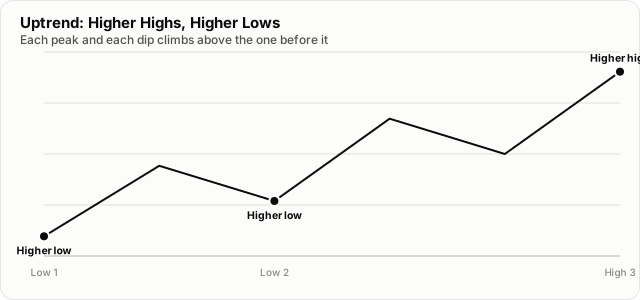
- Uptrend — price makes higher highs (each peak is taller) and higher lows (each dip is shallower). Buyers are winning.
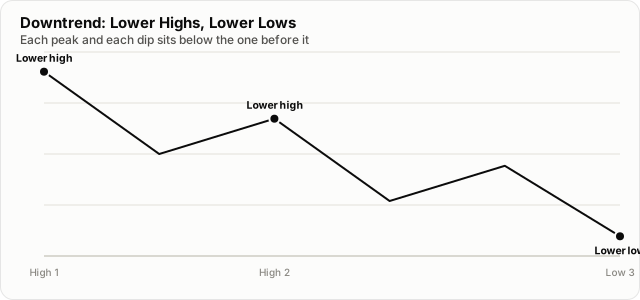
- Downtrend — lower highs and lower lows. Sellers are winning.
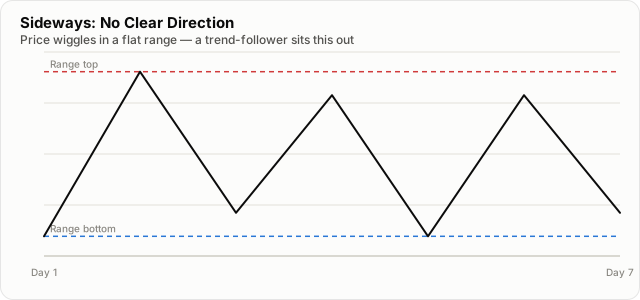
- Sideways — price wiggles in a flat range, no clear direction. Skip these.
The trend-following idea
- Do not guess the top or bottom. Join the crowd already moving.
- It is like walking on a moving walkway at the airport — go the same way and you cover more ground with less effort.
- We use a tool called an EMA (Exponential Moving Average — a line that shows the average price of the last N days, with recent days counting more). A 50 EMA is a common trend guide.
The 5 rules (for an uptrend)
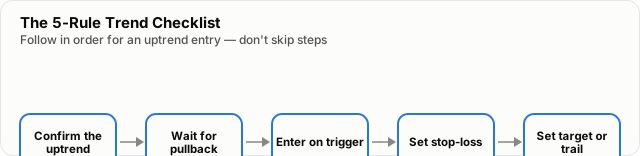
Follow these in order, like a checklist. Do not skip steps.
- Rule 1 — Confirm the uptrend: price makes higher highs and higher lows, and price sits above a rising 50 EMA.
- Rule 2 — Wait for a pullback: let the price dip back toward support (a price floor where buyers step in) or the 50 EMA. Do not chase a price that has run far already.
- Rule 3 — Enter on a trigger: wait for a bullish candle (a green candle showing buyers took control) or a bullish engulfing (a big green candle that fully covers the last red one) right at that level.
- Rule 4 — Set the stop-loss: place it just below the recent swing low (the last small dip). If price falls there, the trend idea is wrong — exit.
- Rule 5 — Set the target or trail: aim for the next resistance (a price ceiling where selling appears), or trail your stop (move it up as price rises) to ride the trend longer.
When it works and when it does not
- Works best in a strong, clean trend. The walkway is moving fast.
- Struggles in choppy, sideways markets — you get faked out again and again. When in doubt, sit out.
- For a downtrend, flip the rules and short-sell (bet on a fall). But most beginners start long-only (buy only). That is fine.
🔍 Example
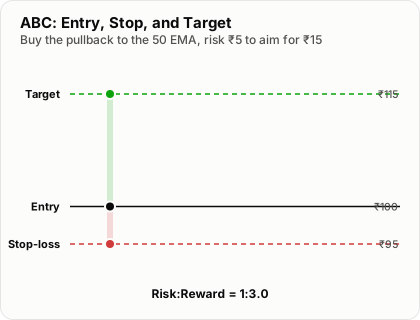
Stock "ABC" is in a clean uptrend, price above a rising 50 EMA.
- Price dips to the 50 EMA at ₹100 (Rule 2 — the pullback).
- A bullish candle forms there. You enter (buy) at ₹100 (Rule 3).
- Recent swing low is ₹95, so stop-loss at ₹95 (Rule 4). Risk = ₹5 per share.
- Next resistance is ₹115, so target ₹115 (Rule 5). Reward = ₹15 per share.
- Risk-reward = 5 : 15 = 1 : 3. You risk ₹5 to try for ₹15.
- If it hits ₹95 first, you lose ₹5 and walk away calmly. That is a normal cost of business.
⚠️ Common mistakes
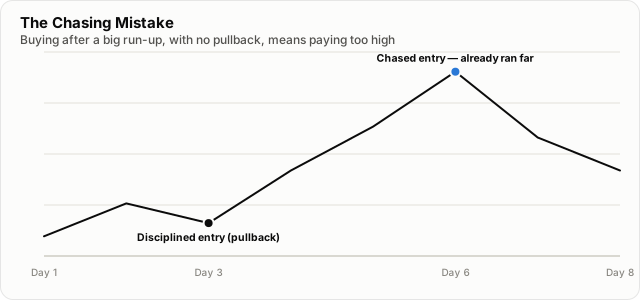
- Chasing — buying after price has already jumped far, with no pullback. You pay too high.
- Trading sideways markets — forcing a trend trade when there is no trend.
- No stop-loss — hoping a losing trade turns around. Hope is not a plan.
- Fighting the trend — buying in a downtrend because it "looks cheap".
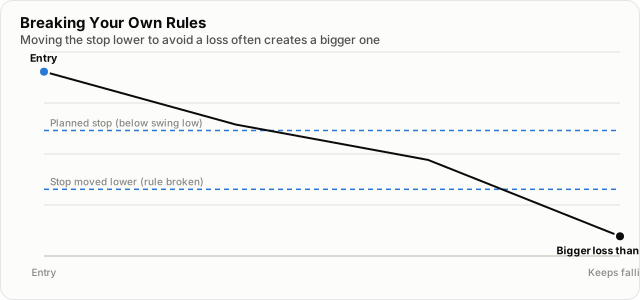
- Breaking your own rules — moving the stop lower to avoid a loss. Follow the plan mechanically.
✅ Key takeaways
- Trade with the trend, not against it.
- Only act when all rules line up: trend + pullback + trigger.
- Every trade needs a stop-loss before you enter.
- Aim for a reward bigger than your risk (like 1 : 2 or 1 : 3).
- Skip choppy markets — cash is a position too.
📝 Quick check
- Q: In an uptrend, where do you wait to enter? A: On a pullback toward support or the 50 EMA, after a bullish trigger — not by chasing a price that already ran up.
- Q: Where does the stop-loss go in this strategy? A: Just below the recent swing low, so you exit if the trend idea proves wrong.
- Q: Why avoid sideways markets? A: There is no clear trend to ride, so you get faked out repeatedly.
📖 New words
- Trend — the general direction price is moving (up, down, or sideways).
- Uptrend — higher highs and higher lows; buyers in control.
- EMA (Exponential Moving Average) — an average-price line that weights recent prices more.
- Pullback — a small temporary dip against the trend.
- Support — a price floor where buyers tend to step in.
- Resistance — a price ceiling where sellers tend to appear.
- Bullish candle / engulfing — a green candle (or a big green one covering the last red) that signals buyers took control.
- Stop-loss — a pre-set exit that caps your loss.
- Swing low — the last small dip in price before it rose again.
- Trailing stop — a stop you move up as price rises, to lock in gains.
- Short-sell — a trade that profits if price falls.
- Risk-reward — the ratio of money risked to money aimed for.
Educational content only — not financial advice. Trading involves the risk of losing money.